Mitsubishi Error Codes in Alhambra: What They Mean
Short and true: A Mitsubishi error code in Alhambra (91801, 91803) is the head telling you which part tripped - P-codes are indoor faults, U-codes are outdoor or inverter faults, and E-codes are communication faults. Note the exact code, then call Alhambra Mitsubishi HVAC at (213) 755-2539 or book online so we read it right the first time.
The summary
- P-codes (P1, P5, P6, P8): indoor protection - thermistor, drain, freeze, pipe temp
- U-codes (U2, U4, U6): outdoor and inverter protection - sensor, discharge, compressor
- E-codes (E6, E7): the indoor and outdoor units lost communication
- First move: write down the exact code and whether the lamp flashes a pattern
- One reset is fine; a code that returns is a real fault, not a glitch
- Repair lanes run ~$79 visit to ~$2,000 for a control board (2026 SoCal; verify)
- Service area: Alhambra 91801 and 91803, all seven neighborhoods
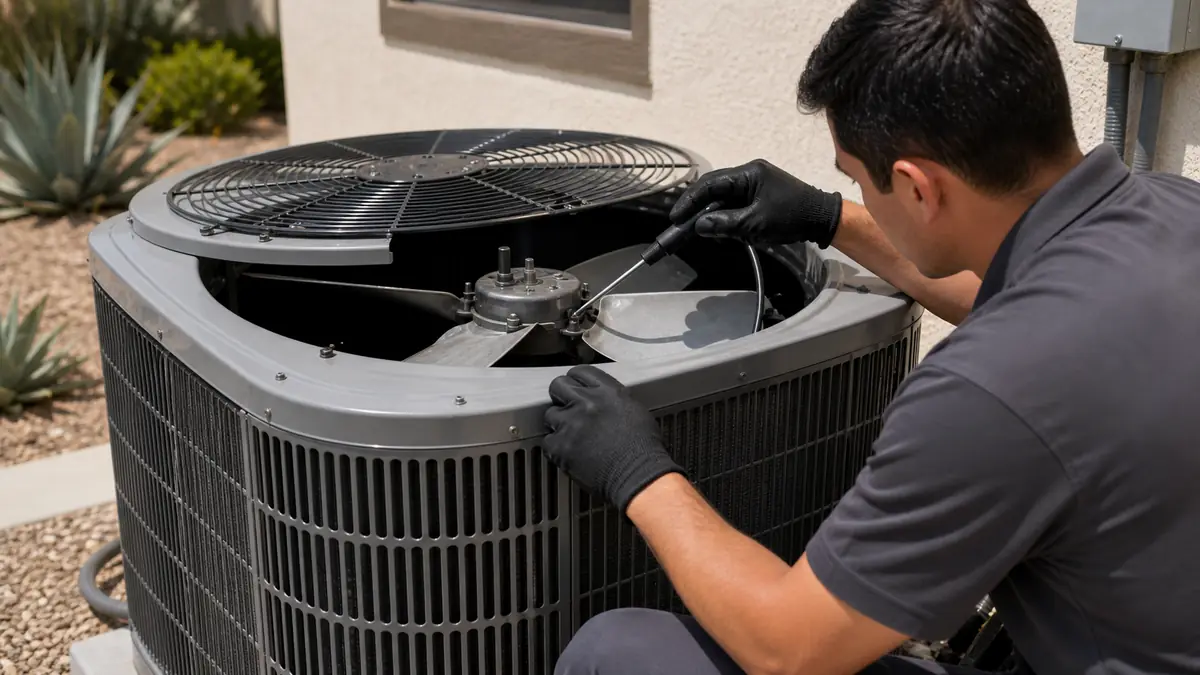
What do the letters on a Mitsubishi code mean?
Mitsubishi Electric groups its faults by where the trouble sits, and the first character tells you the cabinet. A P-code is an indoor-side protection fault - a thermistor that reads open or shorted, a drain pan filling, a coil hitting its freeze limit, or a pipe running an abnormal temperature. A U-code is outdoor and inverter protection - an outdoor sensor, a discharge temperature that climbed too high, or compressor current the inverter would not allow. An E-code is a communication fault, where the indoor and outdoor boards stopped talking over the S1/S2/S3 link. In Alhambra's mix of 1920s Spanish Colonial revival cottages and Bean Tract bungalows, where heads are often retrofit onto homes that never had ducts, the code is your shortcut past a lot of guessing.
Which Mitsubishi codes do we see most in Alhambra?
These are the codes that come up most on the MSZ wall heads and MXZ multi-zone condensers around Emery Park, Midwick, and Granada Park. The table gives the meaning and the first thing a tech checks. It is a reference, not a repair manual - a leak search or a board test still needs gauges and a meter.
| Code | What it means | First check / cost lane |
|---|---|---|
| P1 | Intake (room) air thermistor TH1 open or shorted | Sensor or harness; indoor board ~$400 - $900 |
| P5 | Drain pump abnormal or condensate level high | Clear drain ~$79 - $200; pump ~$150 - $400 |
| P6 | Coil freeze or overheat protection tripped | Airflow clean ~$79 - $200; refrigerant ~$225 - $1,500 |
| P8 | Abnormal pipe temperature - often a refrigerant leak | Leak search + recharge ~$225 - $1,500 |
| E6 / E7 | Indoor-outdoor communication lost (S1/S2/S3) | Wiring ~$79 - $200; control board ~$400 - $2,000 |
| U2 | High discharge temperature on the outdoor unit | Charge/airflow ~$225 - $1,500; compressor higher |
| U4 | Outdoor thermistor open or shorted | Sensor/harness minor; outdoor board ~$400 - $2,000 |
| U6 | Compressor overcurrent sensed by the inverter | Inverter board ~$400 - $2,000; compressor higher |
How do we read codes on a Mitsubishi head?
The read depends on what your system has. On a unit tied to the kumo cloud app or a wired MA remote, the two-character code shows on screen and we just confirm it. On a bare wall head with only an operation lamp, there is no display, so we count the LED pattern - the run, timer, and standby lights blink a defined sequence that maps to a code. The reliable method, and the one we use on every call, is plugging a checker or service tool into the outdoor control board and pulling the stored fault history, because that catches intermittent codes that already cleared off the lamp. We log the model off the data plate too - an MSZ-FS wall head, an SVZ air handler, and an MXZ multi-zone condenser do not all read the same code the same way, and the manual for your exact model settles the ambiguity. Only after the code is confirmed do we open a cabinet.
How do we actually fix them?
Each family of codes has its own repair path, and most are not expensive. A thermistor or sensor code like P1 or U4 is usually a connector reseat or a small sensor swap, and we ohm the thermistor against its temperature curve before condemning it. A drain code like P5 is a clogged condensate line or a stuck float, which is a clear-and-flush within a standard visit. A freeze or pipe code like P6 or P8 sends us to airflow first - the loaded filters that Alhambra's dusty, heat-island air builds up fast - then to a refrigerant leak search at the flare joints, which are the number-one ductless leak point. A communication code like E6 means we trace the S1/S2/S3 inter-unit wiring for a loose terminal or corrosion before suspecting a board. The inverter and compressor codes, U2 and U6, are the ones that can run into real money, so we meter discharge temperature, refrigerant charge, and compressor current before quoting a board or a compressor. The point of the code is to skip the guessing and put the right tool on the right part.
Which two codes have their own deep guide?
Two of the codes above are common enough in Alhambra Mitsubishi systems that we wrote a full walkthrough for each. If your head is throwing one of these, start there for the step-by-step diagnostic, the safe homeowner checks, and the local cost to fix:
- Mitsubishi P1 code - the intake (room) air thermistor reads open or shorted and the head cannot sense room temperature.
- Mitsubishi E6 error - the indoor and outdoor units lost communication over the S1/S2/S3 link.
For the symptom side of a fault - a head that ices, blows weak, or makes noise - the frozen coil and weak airflow pages pair with these codes. When a code points to a real repair, book a Mitsubishi repair visit, and if it quit in a heat wave, our emergency service covers Alhambra same-week.
When is a code urgent versus wait-till-morning?
Most codes are not emergencies - a P1 sensor or a P5 drain will not hurt anyone, and the system simply will not cool right until it is fixed. Treat it as urgent when the code is on the inverter or compressor side and the outdoor unit is short-cycling or tripping the breaker, because forcing a U2 or U6 condition shortens the compressor's life with every restart. Treat it as same-day in a Zone 9 heat run if the head is fully down and the indoor temperature is climbing past comfortable for kids, older adults, or anyone with a health condition. When in doubt, kill power at the disconnect, note the code, and call us - that protects the equipment while we get a tech to your block.
Common questions
Where does a Mitsubishi mini-split show its error code?
It blinks on the indoor head's operation lamp and shows as a two-character code in the kumo cloud app or on a wired MA/ME remote. On a wall head with no display, count the LED flash pattern - the run, timer, and standby lights flash a sequence. Our techs also pull the stored history off the outdoor board with a checker, which is the reliable read.
Are Mitsubishi P-codes and U-codes different kinds of faults?
Yes. P-codes are indoor-side protection faults - thermistors, drain, freeze, and pipe-temperature trips like P1, P5, P6, and P8. U-codes are outdoor and inverter protection - sensor, discharge-temperature, and compressor-current trips like U2, U4, and U6. E-codes, such as E6, are communication faults between the indoor and outdoor units. Knowing the letter tells us which cabinet to open first.
Can I clear a Mitsubishi error code myself?
You can try one reset: kill power at the disconnect for two minutes, restore it, and let the unit re-initialize. If the fault was a one-time glitch it clears. If the code returns, it is a real fault and resetting again just hides it. Codes tied to refrigerant, the compressor, or a control board need metering, not repeated resets.
Does an error code mean I need a whole new mini-split?
Rarely. Most Alhambra Mitsubishi codes resolve with a sensor, a cleaning, a wiring repair, or a recharge - parts in the 79-to-1,500-dollar range. A failed inverter board or compressor is the costly exception. We diagnose the exact code before quoting, so you replace a part and not the whole system when a part is all it needs.