Mitsubishi Mini-Split Making Strange Noises in Alhambra
Short and true: Strange noises from a Mitsubishi unit in Alhambra (91801, 91803) point to specific parts: a hard buzz-with-no-start at the MUZ usually means a contactor, capacitor, or stalled compressor, while indoor clatter points to the blower wheel. Shut off any buzz with a hot smell, then call Alhambra Mitsubishi HVAC at (213) 755-2539 or book online.
The summary
- Hard buzz, no start (MUZ): contactor, capacitor, or stalled compressor
- Continuous loud hiss + weak cool: possible flare-joint refrigerant leak
- Indoor clatter or scrape: blower wheel, debris, or worn fan bearing
- Outdoor rattle: loose panels or debris at the fan grille (often cheap)
- Soft gurgle/hiss at start-stop: normal refrigerant flow through the LEV/EEV
- Shut off and call if a buzz comes with a hot or electrical smell
- Service area: Alhambra 91801 and 91803, all seven neighborhoods
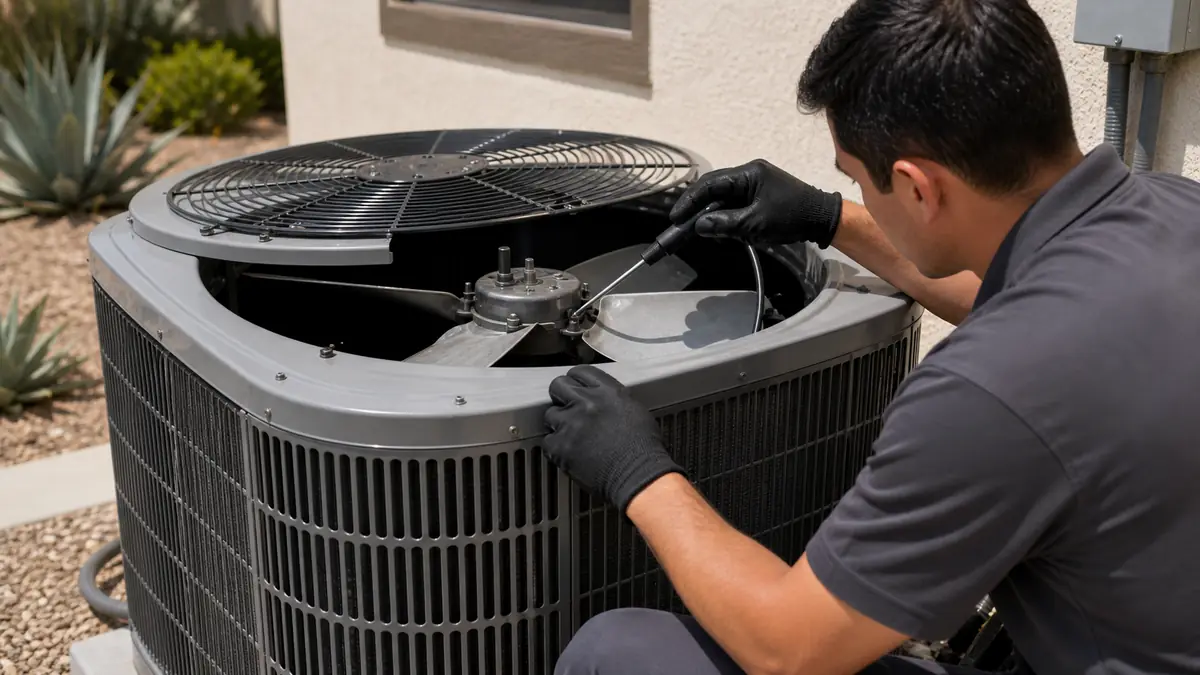
What is my Mitsubishi unit trying to tell me?
Mini-splits are quiet by design, so a new noise is a real signal. The trick is matching the sound to the part. A deep electrical hum at the outdoor MUZ unit with no fan or compressor motion is electrical - a chattering contactor, a tired capacitor, or a compressor straining to start. A continuous high hiss while cooling fades suggests refrigerant escaping a flare joint. Clatter or scraping from the indoor head is mechanical, almost always the blower wheel or its bearing. Some sounds, though, are simply the system working.
Which noises are normal and which are not?
| Noise | Likely cause / first check | Cost lane |
|---|---|---|
| Soft gurgle/hiss at start or stop | Refrigerant through LEV/EEV - normal | None |
| Hard buzz, outdoor unit will not start | Contactor, capacitor, or stalled compressor | $150 capacitor to $1,200 - $3,500 compressor |
| Continuous loud hiss, weak cooling | Flare-joint refrigerant leak - leak search | ~$225 - $1,500 |
| Indoor clatter / scrape while running | Blower wheel debris, cracked wheel, bearing | ~$150 - $450, motor higher |
| Outdoor rattle or vibration | Loose panels or debris at fan grille | ~$150 - $300 |
How we trace a noise to the failing part
A noise is a clue, and the diagnosis is mostly about location and timing. We start by asking where it comes from - the indoor head or the outdoor MUZ - and when it happens, at start-up, while running, or at shut-down. A soft gurgle or hiss right at start or stop almost always traces to refrigerant moving through the LEV/EEV expansion valve and is normal, so we rule that out first rather than alarm you. At the outdoor unit, a deep electrical hum with no fan or compressor motion sends us straight to the electrical side: we meter the run capacitor for lost capacitance, inspect the contactor for the pitted or chattering contacts that buzz, and test whether the inverter is even commanding the compressor before we conclude the compressor itself is stalling. A continuous high hiss while the room stops cooling moves us to a flare-joint leak search with gauges and a detector. Indoor clatter or scraping we trace to the blower wheel - debris caught in it, a cracked wheel, or a worn fan-motor bearing - and we stop the unit before it sheds pieces into the coil. We also check the simple stuff a homeowner cannot: loose panel screws, isolation feet, and clearance, because on Alhambra's tight lots a perfectly healthy condenser can resonate off a fence and sound like it is dying.
Does Alhambra's setting cause extra noise?
It contributes. Many Alhambra MUZ condensers sit on narrow side-yard pads inches from a neighbor's wall in the tight lots of Emery Park and Bean Tract, so vibration that would be inaudible in a big yard reflects right back into the house. Older 1920s homes also transmit structural noise readily through plaster and wood. We add isolation feet and re-secure panels on these tight-lot installs, which often quiets a "failing" unit that was really just resonating off a fence.
When does a noise mean stop running it?
Stop and shut off the breaker if the outdoor unit buzzes hard without starting, if a buzz comes with a hot or electrical smell, or if the indoor head clatters like something is loose inside - forcing any of those turns a small repair into a compressor or motor replacement. Book a Mitsubishi repair visit; if it failed in a heat wave, our emergency service covers after-hours. A noise paired with weak output also ties into weak airflow.
Common questions
My Mitsubishi makes a gurgling or hissing sound. Is that bad?
A soft hiss or gurgle right after the unit starts or stops is usually refrigerant moving through the LEV/EEV - normal. A continuous loud hiss, especially with weak cooling, can mean a refrigerant leak at a flare joint. If it is constant and the room is not cooling, that one is worth a call.
Why does the outdoor unit rattle or buzz?
A rattle is often loose panel screws or debris against the fan grille - cheap fixes. A buzz from the MUZ condenser can be a failing contactor chattering or a tired capacitor, and a deep hum with no start usually means the compressor is trying and failing to spin. The buzz-without-start is the one to stop running.
There is a clicking or clattering from the indoor head. What is it?
Light clicking at startup is the vane motor and relays - normal. A repetitive clatter or scraping while running points to the blower wheel: something caught in it, a cracked wheel, or a worn fan-motor bearing. Running it that way can shed pieces into the coil, so it is worth looking at sooner than later.
Is a vibrating or humming noise ever an emergency?
If the outdoor unit hums hard and will not start, or you hear a buzz paired with a hot or electrical smell, shut it off at the breaker and call. That pattern is a stalled compressor or a failing electrical component, and forcing it risks a far costlier repair. A faint hum that cools fine can wait for a normal visit.