Mitsubishi E6 Error in Alhambra: The Units Lost Communication
Short and true: A Mitsubishi E6 error in Alhambra (91801, 91803) means the indoor and outdoor units lost communication across the S1/S2/S3 link - so the head blows but the condenser will not respond, and you should call Alhambra Mitsubishi HVAC at (213) 755-2539 or book online to trace the wiring. It is usually a loose terminal, not a failed board.
The summary
- E6 (E6/E7 family) = indoor and outdoor units lost communication
- The signal rides the S1/S2/S3 inter-unit cable between the cabinets
- Top cause: a loose, corroded, or miswired S1/S2/S3 terminal
- Less common: a failed indoor or outdoor control PCB
- Symptom: the head runs but the condenser will not start on command
- Wiring/terminal ~$79 - $200; control board ~$400 - $2,000 (2026 SoCal; verify)
- Service area: Alhambra 91801 and 91803, all seven neighborhoods
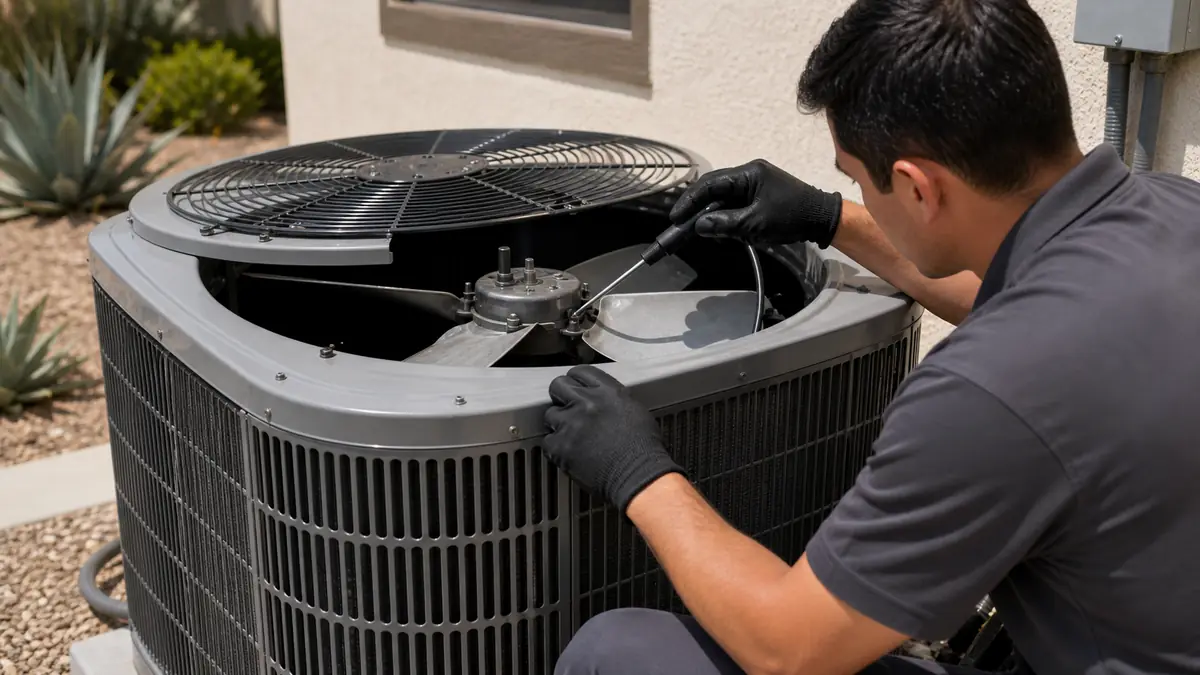
What is the E6 error telling you on a Mitsubishi?
On a Mitsubishi mini-split the indoor head and the outdoor condenser are two brains that have to stay in constant conversation, and that conversation travels on a three-conductor cable landed at terminals labeled S1, S2, and S3. S1 and S2 carry the power leg between the cabinets; S3 carries the data signal that lets the head command the compressor and the condenser report back. E6 - part of the E6/E7 communication family - is the system saying that handshake failed: the indoor board sent a message and heard nothing valid back, or the polarity and voltage on the link are wrong. When that happens the head still powers up and the fan still turns, so it looks alive, but it cannot drive the outdoor unit, so you get air with no real cooling. The code is precise about the symptom and vague about the cause on purpose - the system knows the line went quiet, not why, and finding the why is the diagnostic.
Why do Alhambra installs throw E6 in the first place?
The pattern here is mostly about wiring and weather, not failed electronics. Alhambra's housing stock leans heavily on 1920s Spanish Colonial revival, Tudor, and Craftsman homes that never had central ducts, so mini-splits were retrofit - line sets and the S1/S2/S3 cable were run through old framing, along exterior walls, and into outdoor disconnects that sit in the sun and the valley-floor humidity. Over years, an outdoor terminal block oxidizes, a screw that was just-snug at install backs out under thermal cycling, or a UV-baked cable jacket cracks and lets moisture into the conductors - any one drops the link and latches E6. The dense urban setting east of downtown LA adds salt-laden grime and pollen that accelerate terminal corrosion. We also see install-era miswires surface as E6 when a homeowner or handyman swaps in a new head and lands S1/S2/S3 out of order. The common thread is the connection, which is why we never start at the board.
How does a tech diagnose a Mitsubishi E6 step by step?
The sequence is built to prove the cheap cause before chasing the expensive one. First, we confirm E6 on the remote, the kumo app, or the LED flash, and pull the outdoor board's stored fault history so we know whether the link drops steadily or intermittently. Second, we kill power at both disconnects and physically inspect the S1/S2/S3 terminals at the indoor head and the outdoor unit, looking for a backed-out screw, oxidized or discolored contacts, a nicked conductor, or terminals landed in the wrong order against the wiring diagram. Third, with power restored we meter the link: we read the voltage between S1-S2 to confirm the power leg is present, then check the S2-S3 signal voltage, because a dead power leg and a dead signal point at different faults. Fourth, we verify line voltage and the disconnect feeding the condenser, since low or lost supply at the outdoor unit can masquerade as a communication loss. Fifth, only when the wiring re-lands clean, the terminals are tight, and the link voltages still read wrong do we suspect a control PCB - and then we isolate whether the indoor or outdoor board is the one that stopped responding. Each reading - the S1-S2 power leg, the S2-S3 signal, the supply voltage - narrows the fault so the repair matches the evidence.
What can I safely check before calling?
E6 leaves a homeowner less to do safely than a sensor code, because the live S1/S2/S3 link carries the power leg and you should not probe it. Two moves are fair game. First, a single reset: turn the system off at the indoor disconnect, wait two minutes, and restore it - if a momentary glitch caused E6, it clears, and if it returns, you have learned it is a real fault. Second, a visual-only look: if your outdoor disconnect box is the pull-out type and is sitting only partway seated, reseating it (with the breaker off) restores power that a half-pulled disconnect was starving. Do not open terminal covers, loosen screws, or pull on the inter-unit cable - that is energized work on a circuit that carries both data and power, and a wrong move there can damage a board on either end. The table sorts the safe checks from the pro work.
| What you see | Likely cause / who handles it | Cost lane |
|---|---|---|
| E6 once after a storm or outage, clears on reset | One-time glitch - homeowner reset | Free |
| Outdoor disconnect half-pulled, no condenser power | Reseat disconnect (breaker off) - homeowner | Free |
| E6 steady, corroded or loose S1/S2/S3 terminals | Re-land and clean terminals - pro | ~$79 - $200 |
| Wiring tight but link voltage still wrong | Failed indoor or outdoor control board - pro | ~$400 - $2,000 |
What does an E6 fix cost in Alhambra, and is it urgent?
Cost on E6 splits hard between two outcomes, which is why the on-site diagnosis matters so much. If the fault is in the wiring - and most are - re-landing the S1/S2/S3 terminals, cleaning corrosion off an outdoor block, or correcting a miswire is usually done inside a standard 79-to-200-dollar service call with no parts. If the boards are clean but communication still fails, you are into a control or inverter PCB at roughly 400 to 2,000 dollars depending on the model and parts lead time. We always test the wiring and power side to completion before quoting a board, because condemning electronics on a corroded terminal would be the wrong, expensive call. On urgency: E6 is not a safety hazard, but it does mean no real cooling, since the condenser will not run. In a Zone 9 heat stretch that gets pressing fast for a household with kids or older adults in Bean Tract or Granada Park. Book a Mitsubishi repair visit for a steady E6; if the home is overheating and the unit is fully down, our emergency service covers Alhambra same-week. To see how E6 fits the other codes, the Mitsubishi error codes hub lays out the full P, U, and E map.
Common questions
Does a Mitsubishi E6 always mean a bad control board?
No, and that is the important part. E6 means the indoor and outdoor units stopped talking, and the most common reason is the cheap one - a loose, corroded, or miswired S1/S2/S3 terminal, not a failed board. We check every connection and the line voltage first. A control board is the last suspect, condemned only after the wiring and power side test clean, because a board is the costly fix and wiring usually is not.
Can a loose wire really cause an E6 error?
Yes - it is the leading cause. The S1, S2, and S3 terminals carry both power and the data signal between the cabinets, so a single backed-out screw, an oxidized contact, or a wire nicked during install drops the link and throws E6. Outdoor terminals exposed to Alhambra weather corrode over years. Re-landing and torquing the connections often clears E6 inside one visit with no parts at all.
Is it safe to keep trying the unit with an E6 code?
It is not unsafe, but it is pointless and can mask the cause. With communication down, the outdoor unit will not run on command, so the head blows room-temperature air or nothing. Repeated restarts will not re-establish a link broken by bad wiring. One reset is reasonable; after that, leave it and call, because forcing it on a miswired S1/S2/S3 can stress the boards on both ends.
How long does an E6 repair take in Alhambra?
Most E6 calls finish in a single visit. A wiring or terminal repair - re-landing S1/S2/S3, cleaning corrosion, correcting a miswire - is typically done within a standard 79-to-200-dollar service call. The longer job is a failed inverter or control board, which depends on parts availability and runs 400 to 2,000 dollars. We confirm which it is on site before quoting, so you know the path before we start.